


Annapurna Base Camp Trek - 12 Days
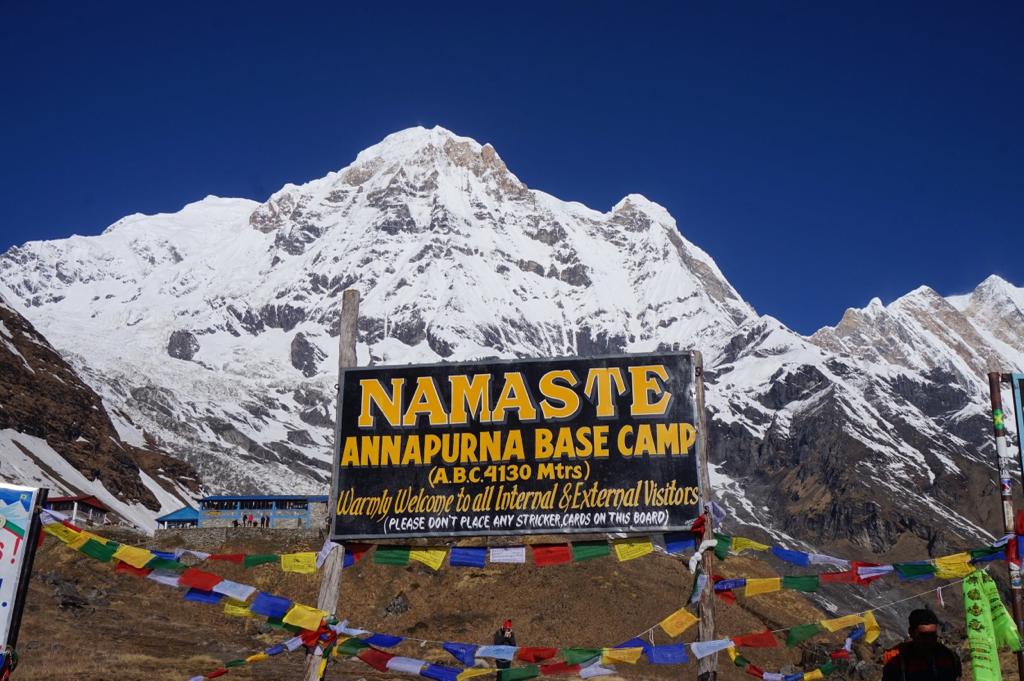
Annapurna Base Camp Trek reaches 4,130 m / 13,549 ft inside the Annapurna Sanctuary, following a classic teahouse route through Chhomrong, Bamboo, Deurali, and Machhapuchhre Base Camp. It is one of Nepal's best-known moderate to challenging treks because it combines village trails, long stone stair sections, and close views of Annapurna South, Hiunchuli, Machhapuchhre, and Annapurna I.
Country
Nepal
Duration
12 Days
Difficulty
Moderate to Challenging
Activity
Trek
Max. altitude
4,130 m / 13,549 ft
Best season
Mar-May, Oct-Nov
Accommodation
Tea House & Hotel
Meals
Breakfast + Trek Meals
Start/End Point
Kathmandu
Signature Moments
Highlights
- Reach Annapurna Base Camp at 4,130 m inside the Annapurna Sanctuary, a high glacial basin ringed by major Himalayan peaks.
- Follow the standard ABC corridor through Chhomrong, Bamboo, Deurali, and Machhapuchhre Base Camp with teahouse stays along the way.
- See close mountain views of Annapurna South, Hiunchuli, Machhapuchhre, and the Annapurna massif on a trek that usually takes 7 to 12 walking days depending on the itinerary.
Trail Brief
Overview
A classic Annapurna Sanctuary trek with real altitude, established teahouses, and one of Nepal's most recognizable base camp settings.
Annapurna Base Camp Trek is one of Nepal's most established trekking routes. Nepal Tourism Board highlights the Annapurna region as home to Annapurna I (8,091 m), the world's tenth-highest mountain, and ABC sits in the heart of that mountain amphitheater at 4,130 m.
The standard route is non-technical, but it is not an easy walk. Most trekkers rate it as moderate to challenging because of the repeated ascents and descents, the long stone stair sections around Chhomrong, and the altitude above 3,000 meters on the upper valley approach.
Most classic itineraries move in through Chhomrong, Bamboo, Deurali, and Machhapuchhre Base Camp before reaching Annapurna Base Camp. Depending on the trailhead and whether you add places like Ghandruk or Poon Hill, the trek is commonly completed in about 7 to 12 days on a teahouse itinerary.
Official permit information is also straightforward for most visitors: the Annapurna Conservation Area Permit (ACAP) is listed by NTNC at NPR 3,000 for foreign nationals and NPR 1,000 for SAARC nationals, while TAAN lists TIMS at NPR 2,000 for FIT trekkers and NPR 1,000 for group trekkers. For weather and visibility, the most reliable trekking windows are usually March to May and October to November.
ABC rewards trekkers with a huge change in scenery over a relatively short distance: terraced hillsides and Gurung villages lower down, bamboo and rhododendron forest in the middle section, and a cold alpine valley near the top. The upper trail beyond Deurali is the section where altitude, snow, and occasional avalanche or rockfall risk matter most, so current local conditions should always be checked before departure.
Source references: Nepal Tourism Board, NTNC e-permit, and TAAN TIMS information.
Inclusions & Exclusions
Kathmandu and Transfers
- Airport pick-up and drop-off in Kathmandu.
- Hotel stay in Kathmandu and Pokhara as listed in the itinerary.
- Private ground transfers and trek briefing before departure.
Trek Support
- Experienced trekking guide and porter support during the route.
- Teahouse accommodation during the trek with the best available rooms.
- Meals during the trekking days as mentioned in the trip plan.
Permits and Staff
- Annapurna Conservation Area permit and local permit support.
- Staff wages, meals, insurance, and local operating costs.
- Basic first aid kit and route coordination from our team.
Useful Trip Extras
- Simple advice before the trip about gear, weather, and pacing.
- Help arranging transport between the trek start and finish points.
- Support from a local team that knows the trail conditions well.
Price Excludes
- International flights to and from Nepal.
- Nepal visa fees and personal expenses in Kathmandu or Pokhara.
- Lunch and dinner in the cities unless clearly mentioned.
- Travel insurance with high-altitude trekking rescue coverage.
- Personal trekking gear, hot showers, charging, drinks, snacks, and tips.
We meet you at the airport, transfer you to the hotel, and give you time to rest after the journey.
Today we travel to Pokhara and go over the plan for the trek before the trail begins.
The first day on foot brings village paths, terraced hillsides, and the first big mountain views.
We follow stone steps down and back up again, then move into quieter forest as the valley narrows.
The trail climbs through bamboo and rhododendron before opening into a more alpine landscape.
We pass Machhapuchhre Base Camp and continue into the high mountain bowl of Annapurna Base Camp.
After an early mountain sunrise, we retrace the route downhill to lower and warmer air.
We continue down through Chhomrong and end the day near Jhinu, known for its natural hot springs.
A shorter walk brings us to the road, then we drive back to Pokhara for a comfortable evening.
This extra day gives you time to rest, enjoy the lake city, or keep a weather buffer in the plan.
We travel back to Kathmandu and help with hotel check-in and any final arrangements.
We transfer you to the airport for your flight home or for your next trip in Nepal.
This trek is a good fit for active travelers who can handle several days of uphill and downhill walking. You do not need climbing experience, but decent fitness helps a lot.
It is usually rated moderate to challenging rather than easy. The trail is well established and non-technical, but repeated climbs, long stair sections, and the altitude at 4,130 m make it feel like a proper Himalayan trek.
Previous trekking experience is helpful, but it is not required. Many first-time trekkers complete this route well if they prepare and walk at a steady pace.
The main trekking windows are spring from March to May and autumn from October to November. Those months usually offer the clearest mountain views and more stable trail conditions than the monsoon period.
The standard permits are ACAP and TIMS. NTNC currently lists ACAP at NPR 3,000 for foreign nationals and NPR 1,000 for SAARC nationals, while TAAN lists TIMS at NPR 2,000 for FIT trekkers and NPR 1,000 for group trekkers.
Yes, keeping one spare day is smart. Road travel, weather, or simply wanting a slower finish can make that extra time useful.
Yes. ABC reaches 4,130 m, so altitude sickness is still a real concern even though the trail is a teahouse trek. Sensible pacing, hydration, and paying attention to symptoms matter throughout the upper section.
Teahouses are simple and friendly. Lower on the trail they feel more comfortable, while higher up the rooms and facilities become more basic because of the location.
You should have travel insurance that covers trekking up to the full trip altitude and emergency helicopter evacuation in Nepal.
They are available in many lodges, but they often cost extra. Higher on the route, access can be more limited and depends on the stop.
The route packs a lot into a relatively short trek: village life, forest, teahouse culture, and a final base camp set inside a dramatic mountain amphitheater. That combination is what keeps ABC among Nepal's most popular trekking routes.