

Manaslu Circuit Trek - 16 Days
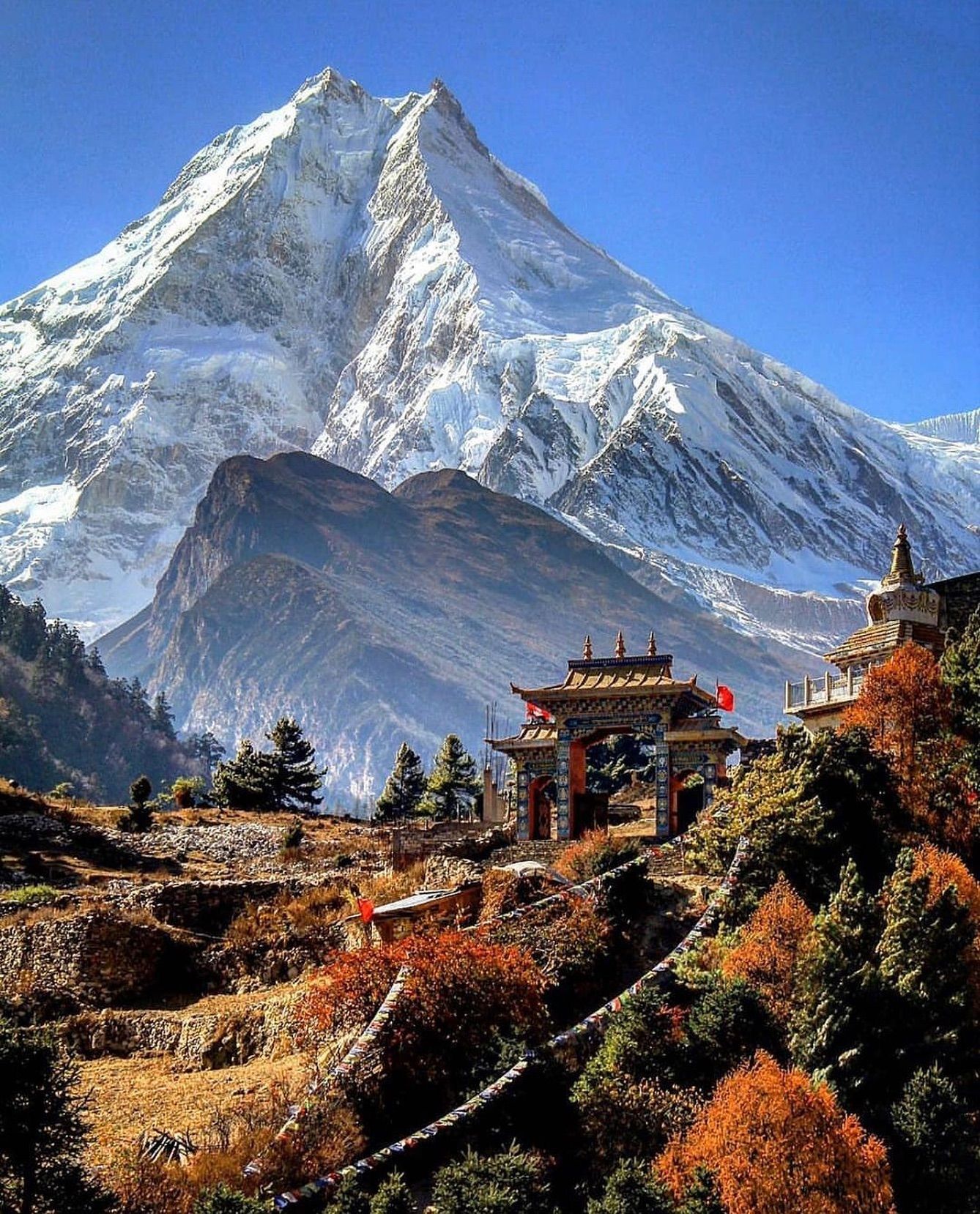
The Manaslu Circuit Trek is a 16-day journey through the Budhi Gandaki valley and over Larkya La, with quieter trails, strong mountain culture, and a route that feels more remote than many of Nepal's famous treks.
Country
Nepal
Duration
16 Days
Difficulty
Challenging
Activity
Trek
Max. altitude
5,160 m / 16,929 ft
Best season
Mar-May, Sep-Nov
Accommodation
Teahouse or Lodge
Meals
Breakfast, Lunch & Dinner
Start/End Point
Kathmandu
Signature Moments
Highlights
- Follow a quieter restricted-area trekking route with fewer crowds than Everest or Annapurna.
- Cross Larkya La Pass at 5,160 meters after a steady build-up through the Manaslu valley.
- Walk through Tibetan-influenced villages, forest, river gorges, and high alpine terrain around Manaslu.
Trail Brief
Overview
A classic long trek for people who want a quieter Himalayan circuit, a major pass crossing, and a more traditional trekking atmosphere.
Manaslu Circuit Trek follows the Budhi Gandaki valley from the lower warm hills up to the high country near Larkya La. It is one of the best routes in Nepal for trekkers who want variety, because the landscape, culture, and walking conditions change steadily as you move higher.
On the standard 16-day route, the trek starts with a drive to Soti Khola and then moves through Machha Khola, Doban, Philim, Deng, Ghap, Namrung, Lho, Samagaun, Samdo, and Dharamsala before crossing the pass and descending through Bhimtang, Goa, and Dharapani.
The biggest day is the crossing of Larkya La, but the trek is not only about the pass. Villages like Lho, Samagaun, and Samdo give the route its character, with monastery life, mountain views, and a stronger Tibetan cultural feel as you move deeper into the valley.
This is not a technical climb, but it is still a demanding trek. The total route is around 177 kilometers, the pass day is long, and the altitude is serious. For fit trekkers who want a real mountain circuit, Manaslu is one of the strongest choices in Nepal.
Inclusions & Exclusions
Kathmandu and Transport
- Airport pick-up and drop-off in Kathmandu.
- Local bus transport from Kathmandu to Soti Khola.
- Local bus transport from Dharapani back to Kathmandu.
Trek Support
- English-speaking trekking guide with insurance, food, transport, and accommodation covered.
- Use of a sleeping bag and duffel bag if needed during the trek.
- Three meals a day during the trekking days.
Accommodation and Trek Essentials
- Teahouse accommodation during the trek.
- Daily seasonal fresh fruit after dinner.
- Guide-carried first aid kit with an oximeter for altitude checks.
Permits and Entry Fees
- All trekking permits, including ACAP, MCAP, and the Manaslu special permit.
- All government and local taxes.
- Basic route coordination and trek administration.
Price Excludes
- International flight ticket and Nepal visa fee.
- Hotel stay and meals in Kathmandu.
- Travel and rescue insurance.
- Personal expenses such as Wi-Fi, phone calls, laundry, bar bills, battery charging, water, showers, and extra tea or coffee.
- Tips for guides, porters, and drivers, plus any extra nights caused by early arrival, late departure, or an early return from the trek.
The trek starts with a long road journey out of Kathmandu through Arughat to Soti Khola, the usual starting point for this 16-day circuit.
We begin walking along the Budhi Gandaki through lower village trails and river sections to Machha Khola.
The route stays close to the river, with suspension bridges, narrow trail sections, and a gradual gain in altitude.
We continue through the valley to Philim, passing fields, village sections, and the changing scenery of the lower Manaslu region.
The trail climbs and drops through forested ground and settlements as we move deeper into the restricted area.
We continue up the Budhi Gandaki valley toward Ghap, where the architecture and culture show stronger Tibetan influence.
The route climbs through forest and quieter mountain villages before reaching Namrung.
Today brings wider views and one of the first big looks toward Manaslu as we walk up to Lho.
We move higher into the upper valley and reach Samagaun, one of the most important villages on the circuit.
This rest day is built in to help with altitude before the route moves toward the pass section.
The walk is shorter today, which is useful for acclimatization while moving to the last permanent village before the pass.
We head up to Dharamsala, the final stop before Larkya La, keeping the pace careful and steady.
This is the hardest day of the trek, with an early start, the pass crossing at 5,160 meters, and a long descent to Bhimtang.
After the pass, the trail drops into greener forest and softer terrain as we descend toward Goa.
We continue to Dharapani, where the Manaslu route reconnects with the Annapurna trekking corridor.
The circuit ends with the long road return through Besisahar and onward to Kathmandu or Pokhara.
This trek is good for fit walkers who want a longer route, steady altitude gain, and a quieter alternative to some of Nepal's busier treks.
Published itineraries often call it moderate to challenging, but most trekkers feel the route is demanding because of the total distance, the altitude, and the long day over Larkya La.
No technical climbing is needed, but you should be comfortable with long walking days and cold conditions near the pass.
Spring and autumn are the main trekking seasons because the weather is usually clearer and the pass conditions are better.
Manaslu is a restricted area, so the trek needs permits and a registered guide as part of the route rules.
The highest point on this 16-day route is Larkya La Pass at about 5,160 meters.
Yes, the standard route usually uses tea house accommodation, which makes the trek more comfortable than camping routes.
You need travel insurance that covers trekking above 5,000 meters and helicopter evacuation in Nepal.
The guide will check conditions carefully and may adjust the timing if the weather is not safe for the crossing.
It feels quieter and more traditional than some famous Nepal treks, with a strong village culture and a beautiful high pass finish.